Are you accessing this website using an Android phone?
If yes, the stress is over, just click the below button to download and install our Android app and we will hence bring the news to your doorstep.

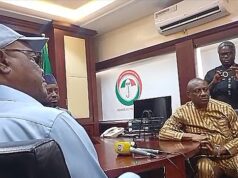
Nigeria’s opposition politics just took a dramatic—and expensive—turn as a faction of the Peoples Democratic Party backed by Nyesom Wike rolled out eye-watering price tags for aspirants eyeing the 2027 elections, igniting fresh controversy within an already fractured party.
In a move that has sent shockwaves through political circles, the Wike-aligned camp fixed its presidential nomination form at a staggering ₦51 million, while governorship hopefuls must cough up ₦21 million to join the race. According to the faction’s timetable released by its National Organising Secretary, the breakdown reveals ₦1 million for expression of interest across all positions, with nomination fees climbing steeply depending on the office sought.
For perspective, this pricing signals a notable escalation from previous cycles. During the buildup to the 2023 Nigerian presidential election, the PDP’s presidential forms were significantly lower, highlighting just how sharply the cost of political ambition has risen within the party.
The timetable itself is tight and strategic. Sale of forms is slated to run from April 27 to May 4, with submissions closing May 9. Screening follows almost immediately, and by mid-to-late May, primaries for various offices—including the all-important presidential primary on May 18—will be underway.
But beyond the numbers lies a deeper political storm. The PDP is currently split into rival factions, with one bloc aligned with Wike and another backed by figures like Seyi Makinde and Bala Mohammed. The internal crisis has spilled into the courts, with legal battles still pending and the Supreme Court of Nigeria yet to deliver a final verdict on the party’s leadership tussle.
Critics argue that the high fees could effectively shut out younger or less wealthy aspirants, turning the contest into an exclusive club for political heavyweights and moneyed elites. However, the faction appears to be softening the blow slightly by allowing female aspirants to pay only the expression of interest fee, a move likely aimed at boosting inclusion—at least on paper.
The development also aligns with recent remarks from Wike himself, who has publicly questioned the PDP’s financial strength and capacity to sponsor a viable presidential candidate, raising eyebrows about whether the steep fees are a fundraising strategy or a political gatekeeping tool.
As Nigeria inches closer to 2027, the opposition party that once dominated national politics now finds itself battling internal divisions, legal uncertainty, and rising costs that could reshape its candidate landscape. Whether this high-stakes gamble will consolidate power or further fracture the PDP remains one of the biggest political questions looming over the next election cycle.
Join Our WhatsApp Channel
DEAR READER,
Good journalism costs a lot of money. Yet only good journalism can ensure the possibility of a good society, an accountable democracy, and a transparent government. For continued free access to the best investigative journalism in the country, we ask you to consider making modest support to this noble endeavor. By contributing to The Trumpet News, you are helping to sustain journalism of relevance and ensuring it remains free and available to all. Your donation is voluntary — please decide how much and how often you want to give.
For offline donations, email donations@thetrumpetngr.com or call +2347026891070:
You May Also Like This...