Are you accessing this website using an Android phone?
If yes, the stress is over, just click the below button to download and install our Android app and we will hence bring the news to your doorstep.

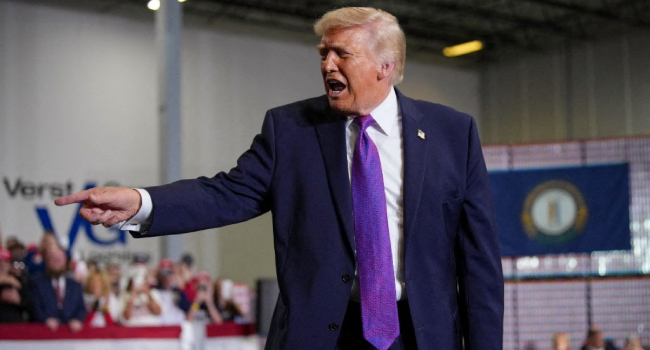
Tensions in the Middle East are once again teetering on a knife’s edge as Donald Trump doubles down on a hardline stance against Iran, vowing that a sweeping U.S. naval blockade on Iranian ports will remain “in full force” until a complete deal is sealed with Tehran. The declaration comes amid fragile ceasefire signals and rising global anxiety over the fate of one of the world’s most critical النفط arteries — the Strait of Hormuz.
Despite Iran’s announcement that the strategic waterway is now open to commercial traffic, Washington is not backing down. Trump insists the blockade—targeting ships entering and leaving Iranian ports—will continue until what he describes as a “100% complete” agreement is reached.
The stakes could not be higher. The Strait of Hormuz carries roughly a fifth of global oil supply, making any disruption a direct threat to international markets. While Tehran has attempted to reassure the world by reopening the passage, its leadership has issued a stark warning: if the U.S. blockade persists, the strait itself could once again be shut down.
Behind the scenes, the blockade is no symbolic move. Thousands of U.S. troops, warships, and surveillance systems have been deployed across the Persian Gulf and Gulf of Oman, forming a tight maritime chokehold around Iran. Reports indicate that several vessels have already been forced to turn back, while others are being closely monitored or intercepted.
This aggressive strategy follows the collapse of recent negotiations and forms part of a broader campaign that has seen escalating military actions since early 2026. The blockade alone is estimated to be costing Iran hundreds of millions of dollars daily in lost trade, intensifying economic pressure on the regime.
Yet even as Trump paints an optimistic picture—claiming there are no major obstacles left to a deal—Tehran has pushed back sharply, accusing him of making misleading statements about the state of negotiations. Iranian officials have made it clear that any lasting peace hinges on the immediate lifting of the blockade.
Meanwhile, global markets are reacting in real time. Oil prices have shown volatility, dipping briefly on news of the strait reopening but remaining sensitive to every new headline. World powers, including European nations and regional mediators, are scrambling to prevent a relapse into full-scale conflict, aware that even a temporary disruption could send shockwaves through the global economy.
For now, the situation remains a high-stakes standoff—one where diplomacy and military pressure are colliding in dangerous proximity. With negotiations hanging in the balance and both sides refusing to blink, the world is left watching a geopolitical chess game where the next move could either unlock peace—or ignite a far wider بحران.
Join Our WhatsApp Channel
DEAR READER,
Good journalism costs a lot of money. Yet only good journalism can ensure the possibility of a good society, an accountable democracy, and a transparent government. For continued free access to the best investigative journalism in the country, we ask you to consider making modest support to this noble endeavor. By contributing to The Trumpet News, you are helping to sustain journalism of relevance and ensuring it remains free and available to all. Your donation is voluntary — please decide how much and how often you want to give.
For offline donations, email donations@thetrumpetngr.com or call +2347026891070:
You May Also Like This...