Are you accessing this website using an Android phone?
If yes, the stress is over, just click the below button to download and install our Android app and we will hence bring the news to your doorstep.

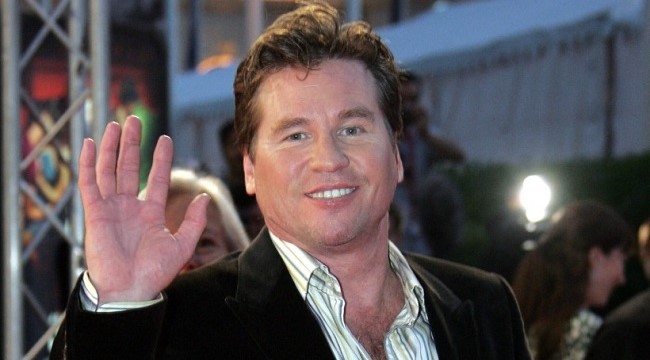
Hollywood has crossed a line many once thought untouchable—and the industry may never look the same again. The late Val Kilmer is back on screen, not through archival footage or unfinished scenes, but through full-scale artificial intelligence, igniting a fierce debate about the future of filmmaking, ethics, and the very meaning of performance.
The bombshell moment arrived at CinemaCon in Las Vegas, where filmmakers unveiled the first trailer for As Deep as the Grave, a project that features a digitally resurrected Kilmer in a major role. The actor, who passed away in 2025 after years of health struggles, appears convincingly alive—speaking, moving, and commanding the screen as if he never left.
Behind the scenes, this resurrection is the result of cutting-edge AI trained on years of Kilmer’s archival footage, photographs, and voice recordings. With the consent and involvement of his children, filmmakers reconstructed his likeness and performance, placing him at the center of the film’s narrative as Father Fintan, a spiritually complex character tied deeply to the story’s themes.
Supporters call it a groundbreaking tribute—a way to honor a legendary actor while pushing storytelling into a bold new frontier. The filmmakers insist the project is ethical, pointing to family approval, union compliance, and Kilmer’s own openness to technology during his lifetime. In fact, the actor had already embraced AI before his death, using it to recreate his voice in Top Gun: Maverick after throat cancer left him unable to speak naturally.
But not everyone is applauding. Critics across Hollywood and beyond have reacted with unease—even outrage—warning that this could open the floodgates to a future where deceased actors are endlessly recreated, controlled, and monetized. Some voices in the industry have labeled the move “disturbing” and “exploitative,” arguing that even with consent, the practice risks turning human legacy into digital property.
The controversy cuts deeper than one film. It strikes at the heart of a rapidly evolving industry already grappling with AI’s growing influence. From synthetic voices to deepfake performances, studios are increasingly experimenting with technology that can replicate human creativity—raising urgent questions about ownership, compensation, and artistic authenticity.
What makes this moment especially seismic is how real it looks. In As Deep as the Grave, Kilmer doesn’t just appear briefly—he reportedly features on screen for over an hour, blurring the line between tribute and full digital reincarnation.
For audiences, it’s both mesmerizing and unsettling. For Hollywood, it’s a warning shot. The same technology that can preserve legacies can just as easily rewrite them, and the industry now finds itself in a high-stakes battle over where to draw the line.
As the credits prepare to roll on this unprecedented experiment, one question looms larger than ever: if AI can bring stars back from the dead, who truly owns the future of storytelling—the artists, or the algorithms?
Join Our WhatsApp Channel
DEAR READER,
Good journalism costs a lot of money. Yet only good journalism can ensure the possibility of a good society, an accountable democracy, and a transparent government. For continued free access to the best investigative journalism in the country, we ask you to consider making modest support to this noble endeavor. By contributing to The Trumpet News, you are helping to sustain journalism of relevance and ensuring it remains free and available to all. Your donation is voluntary — please decide how much and how often you want to give.
For offline donations, email donations@thetrumpetngr.com or call +2347026891070:
You May Also Like This...