Are you accessing this website using an Android phone?
If yes, the stress is over, just click the below button to download and install our Android app and we will hence bring the news to your doorstep.

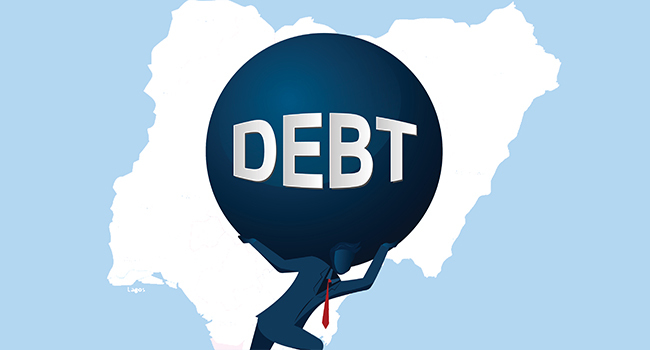
Nigeria’s debt profile has exploded to a staggering ₦159.28 trillion, and the numbers are sending a loud, unmistakable warning across the nation’s economic landscape.
Fresh figures released by the Debt Management Office reveal that as of December 2025, the country’s total public debt climbed sharply, marking yet another record in the relentless rise of government borrowing. This latest jump underscores a pattern that has quietly intensified over recent years—one where debt continues to outpace revenue, tightening the fiscal space and raising serious sustainability concerns.
The debt stock represents the combined liabilities of the federal government, the 36 states, and the Federal Capital Territory, covering both domestic and external obligations. At its core, Nigeria’s debt structure remains split between local borrowing—primarily through bonds and treasury instruments—and foreign loans sourced from multilateral institutions and global markets.
What makes this new figure even more striking is the speed of the climb. Just three months earlier, Nigeria’s debt stood at about ₦153.29 trillion, meaning the country added roughly ₦6 trillion in a single quarter. The pace signals an aggressive borrowing cycle driven largely by budget deficits, infrastructure financing, and the persistent gap between government earnings and expenditure.
Behind the numbers lies a deeper fiscal reality. Nigeria has increasingly leaned on borrowing to sustain public spending, with debt servicing already consuming a significant chunk of government revenue. In fact, projections tied to the 2026 budget show trillions of naira earmarked just to service existing obligations—an indication that the cost of debt is becoming as critical as the debt itself.
The Debt Management Office, established to centralize and manage the country’s debt portfolio, continues to defend the strategy, emphasizing that borrowing is targeted at capital projects and economic development. Yet, analysts warn that without a corresponding surge in revenue—particularly from oil and non-oil sources—the mounting debt could become a long-term burden on growth and stability.
Nigeria’s debt story is not just about size—it’s about structure and sustainability. Domestic debt, often raised through local financial markets, remains a major driver of the increase, while external debt exposes the country to exchange rate risks and global financial pressures. Together, they form a delicate balance that policymakers must manage carefully.
As Africa’s largest economy pushes forward with ambitious reforms and spending plans, the question now is no longer whether Nigeria can borrow—but how long it can sustain the pace without tipping into deeper financial strain.
Join Our WhatsApp Channel
DEAR READER,
Good journalism costs a lot of money. Yet only good journalism can ensure the possibility of a good society, an accountable democracy, and a transparent government. For continued free access to the best investigative journalism in the country, we ask you to consider making modest support to this noble endeavor. By contributing to The Trumpet News, you are helping to sustain journalism of relevance and ensuring it remains free and available to all. Your donation is voluntary — please decide how much and how often you want to give.
For offline donations, email donations@thetrumpetngr.com or call +2347026891070:
You May Also Like This...