Are you accessing this website using an Android phone?
If yes, the stress is over, just click the below button to download and install our Android app and we will hence bring the news to your doorstep.

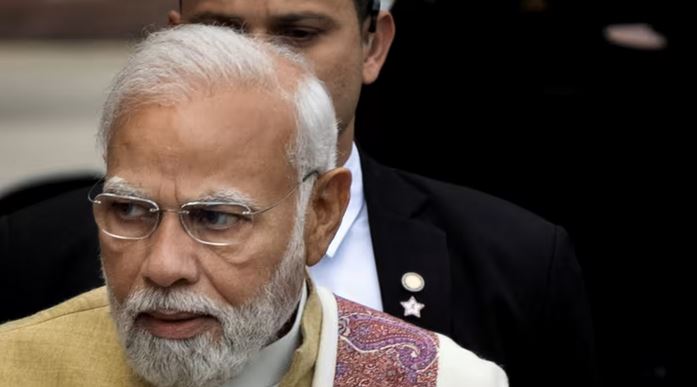
TOKYO — India’s international stature has grown sharply due to its role as the effective leader of the so-called Global South, a shorthand term for emerging and developing economies that do not align with any major power blocs.
The country is chairing the Group of 20 nations this year, with Prime Minister Narendra Modi wasting no time in launching a diplomatic offensive to solidify India’s position as a leading global player.
Modi came under the international spotlight in late May when he met with Ukrainian President Volodymyr Zelenskyy on the sidelines of the Group of Seven summit in Hiroshima, Japan. In their first face-to-face talks since Russia’s invasion of Ukraine last year, Modi told Zelenskyy that he would “do whatever we can” to resolve the conflict.
After the G7 summit, Modi flew to Papua New Guinea to attend the Forum for India-Pacific Islands Cooperation, held for the first time in eight years. He then traveled to Australia in his first visit in nine years, receiving a passionate welcome from citizens of Indian descent.
India has raised its international profile by trying to please both developed and developing economies. Modi stressed to the leaders of major industrialized nations the importance of unity among democratic nations while sympathizing with poor countries struggling with inflation and climate challenges. Some call it omnidirectional diplomacy but others see it as just a “please-all” ploy.
Modi is set to make an official state visit to the U.S. on June 21, and Washington is seen as being eager to use the opportunity to drive a wedge between India and Russia, New Delhi’s major arms supplier. During Modi’s visit, the U.S. and India are expected to sign an agreement for the joint development and production of a fighter jet engine.
 A crude oil tanker sits anchored at the port of Nakhodka in the Russian Far East in December 2022. © Reuters
 Still, India is showing no signs of curbing its large-scale oil imports from Russia. In May, India brought in 1.96 million barrels of Russian crude a day, according to the Press Trust of India news agency. The daily average hit records for eight months in a row.
Last December, the G7 and the European Union imposed an embargo on seaborne Russian crude imports. In addition, the EU in February banned imports of refined petroleum products from Russia, including diesel and jet fuel. These steps are aimed at curbing Moscow’s foreign revenues from energy exports.
India began to boost oil imports from Russia in April 2022, less than two months after Russia invaded Ukraine. In the year through March 2023, India imported a daily average of 1.02 million barrels of Russian crude. That represents an elevenfold increase from the previous year and 20% of the country’s overall oil imports, according to India’s Ministry of Commerce and Industry. As a result, Russia became the nation’s largest oil supplier, rising from 10th place a year earlier. Russia was followed by Iraq, which supplied 1.01 million barrels, and Saudi Arabia, which sold 790,000 barrels.
India depends on imports for 80% of its crude consumption. Ramping up oil imports from Russia offers India three benefits: curbing inflation, improving its trade balance, and diversifying supply.
In terms of inflation, the benefits of Western sanctions are clear: India bought Russian oil at an average price of $83 a barrel in the 2022 fiscal year, compared to $90 for Iraqi oil and $100 for Saudi cargoes.
India’s trade balance has been helped by an increase in overseas sales of its petroleum products. While oil prices surged worldwide, imports of relatively cheap Russian oil helped India reap the benefits of widening margins between the import of crude oil and exports of petroleum products. In value terms, the ratio of petroleum exports to crude imports rose from 54% in the 2021 fiscal year to 59% in fiscal 2022 as the former jumped 50% while the latter rose only 30%. In terms of volume, crude imports grew nearly 10% but petroleum exports remained unchanged.
India has diversified its oil suppliers as its dependence on three major Middle Eastern producers — Iraq, Saudi Arabia, and the United Arab Emirates — declined from 53% to 47%.

At first glance, Modi’s “India First” policy seems to have helped Russia weather Western sanctions, but a careful study of trade figures reveals that what could look like an act of selfishness by India appears to have had benefits for others.
While India has sharply increased imports from Russia, its purchases from other major suppliers have dropped, freeing up more oil for countries in Europe and elsewhere. In fact, India saw imports from six of its top 10 suppliers fall in fiscal 2022, including a decrease of 49% from Nigeria, 24% from the U.S., 18% from Kuwait, and 10% from Iraq. These nations apparently increased exports to countries other than India, including members of the G7 and EU.
India has also refined a large portion of imported Russian oil into products to be sold to countries that have joined the sanctions in a process some pundits half-jokingly called “oil laundering.” India’s shipments of petroleum products to the Netherlands surged 70% in fiscal 2022, making it the top supplier to Europe’s oil trade hub, up from third place the year before. India’s petroleum products appear to have offset shortages of Russian supplies to the EU.
India has been able to play this role in smoothing global flows of oil and oil products because it is the world’s third-largest importer of crude and its fourth-biggest exporter of petroleum products.
Gasoline, naphtha, gas oil, and heavy oil are all made from crude at different stages of refining. Many oil-producing countries simply export any excess products. India, despite having no large oil reserves of its own, has still managed to successfully develop a large oil industry by strategically planning exports of its petroleum products. Last fiscal year, crude oil was India’s biggest import item, while petroleum products made up the largest share of exports.

Western oil majors entered India following World War II. In the 1970s, however, the Indian government seized its business, dividing it among three state-run companies — Indian Oil, Bharat Petroleum, and Hindustan Petroleum.
After India began liberalizing its economy in 1991, Reliance Industries and Essar Oil — both affiliated with local conglomerates — entered the refinery business with an eye to capitalizing on large domestic demand. Reliance now operates the world’s biggest oil refinery plant with a daily capacity of 1.24 million barrels in the western state of Gujarat. Essar Oil was sold to Russian oil major Rosneft in 2017 and renamed Nayara Energy. Together, Reliance and Nayara now account for a third of the nation’s daily refining capacity of some 5 million barrels, the world’s third-largest after the U.S. and China.
As New Delhi often seeks control of wholesale fuel prices as a way to keep inflation down or win votes, the two private sector companies have gradually shifted their focus to overseas markets, eventually paving the way for the country to become a major exporter of petroleum products.
The refusal by the key oil player to join Western sanctions against Russia has irked the U.S. and Europe, but it is questionable how genuinely Western nations worry about India’s noncompliance. A quick look at the difference between Western sanctions imposed on Iran and Russia helps make that clear.
In 2018, the U.S. imposed a ban on oil imports from Iran for its suspected development of nuclear arms. The move was extensive as it targeted buyers of Iranian oil. While eight countries, including Japan, China, India, and South Korea, were initially exempt, they joined the embargo the following year and it remains in force. In contrast, the sanctions against Russia set only a price cap, of $60 per barrel, but do not cover importers of its oil.
The difference stems from the amount of oil the two countries export. Before the ban, Iran shipped out about 3.5 million barrels per day — that volume could be made up for by increased output from leading producers like Saudi Arabia and the UAE. But Russia’s daily exports are approximately 8 million barrels. If that supply disappears, the market could be irreparably damaged, delivering a devastating blow to the world economy.
Thus, the G7 and the EU let India do the “dirty work” of purchasing Russian oil to avert a full-blown crisis, and India has played the role perfectly. Following Russia’s invasion of Ukraine, some experts warned that oil prices could top $200 per barrel amid sanction-triggered confusion, but after peaking at just above $120, prices have fallen back to around $70.
“The past year or so has tested the theory that the global oil market can cope with serious geopolitical turmoil through its dynamic adjustment mechanism,” said Mika Takehara, head of the research and analysis division at the Japan Organization for Metals and Energy Security. “This mechanism would not have worked without India.”
Neither the G7 nor the EU may publicly acknowledge India’s “contribution” to price stability, but there is no denying that the country has played a vital role in preventing a global economic crisis. India may not have intended to play that role, but the impact of its action clearly shows its growing influence, while making everyone aware of Modi’s determination to pursue “strategic autonomy.”
Join Our WhatsApp Channel
DEAR READER,
Good journalism costs a lot of money. Yet only good journalism can ensure the possibility of a good society, an accountable democracy, and a transparent government. For continued free access to the best investigative journalism in the country, we ask you to consider making modest support to this noble endeavor. By contributing to The Trumpet News, you are helping to sustain journalism of relevance and ensuring it remains free and available to all. Your donation is voluntary — please decide how much and how often you want to give.
For offline donations, email donations@thetrumpetngr.com or call +2347026891070:
You May Also Like This...