Are you accessing this website using an Android phone?
If yes, the stress is over, just click the below button to download and install our Android app and we will hence bring the news to your doorstep.

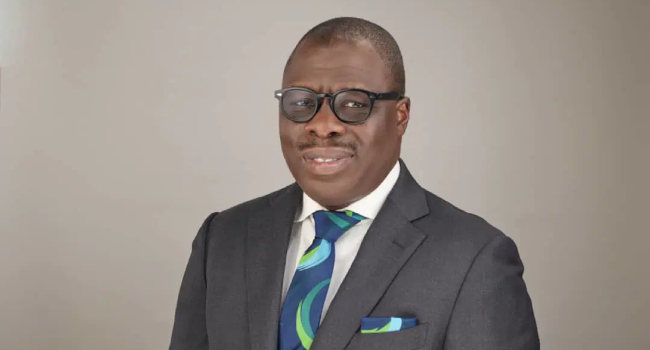
Nigeria’s gas powerhouse has entered a new chapter as Adeleye “Leye” Falade officially steps in as the Managing Director and Chief Executive Officer of Nigeria LNG Limited (NLNG), marking a strategic leadership transition at a time when the nation’s energy future hangs in the balance.
Falade, a seasoned oil and gas technocrat with a global pedigree, assumes office following the exit of Dr. Philip Mshelbila, who now heads to the international stage as Secretary-General of the Gas Exporting Countries Forum (GECF). His appointment, which took effect in April 2026, signals not just a routine leadership change—but a calculated move to steady and scale Nigeria’s liquefied natural gas ambitions.
Before this elevation, Falade served as the Managing Director and CEO of Brunei LNG, one of the world’s longest-running liquefied natural gas facilities, and brings with him decades of experience across Europe, Asia, the Middle East, and Africa. His deep roots within NLNG—where he previously held key operational roles—position him as both an insider and a reformer stepping into one of Nigeria’s most critical economic engines.
NLNG itself remains a heavyweight in Nigeria’s economy, jointly owned by NNPC, Shell, TotalEnergies, and Eni, and responsible for a significant chunk of the country’s foreign exchange earnings. With six operational trains and a production capacity of about 22 million tonnes per annum, the company is currently pushing forward with its ambitious Train 7 project, expected to boost output to roughly 30 million tonnes annually.
Falade’s arrival comes at a defining moment. His predecessor, Mshelbila, steered the company through turbulent waters—ranging from post-pandemic disruptions and pipeline vandalism to global energy shocks triggered by the Russia-Ukraine conflict. Under that leadership, NLNG expanded its gas supply base and secured major long-term agreements to stabilize operations.
Now, the baton passes to Falade, whose mandate is clear but daunting: deliver on expansion promises, strengthen Nigeria’s position in the global LNG market, and ensure the Train 7 project translates into real economic gains for a country hungry for foreign exchange stability.
Industry watchers say his international exposure and operational expertise could be the edge NLNG needs as competition intensifies in the global gas market and energy transition pressures mount. But expectations are sky-high, and the margin for error is razor-thin.
In a sector where leadership defines outcomes, all eyes are now on Falade—not just to maintain NLNG’s legacy, but to redefine it.
Join Our WhatsApp Channel
DEAR READER,
Good journalism costs a lot of money. Yet only good journalism can ensure the possibility of a good society, an accountable democracy, and a transparent government. For continued free access to the best investigative journalism in the country, we ask you to consider making modest support to this noble endeavor. By contributing to The Trumpet News, you are helping to sustain journalism of relevance and ensuring it remains free and available to all. Your donation is voluntary — please decide how much and how often you want to give.
For offline donations, email donations@thetrumpetngr.com or call +2347026891070:
You May Also Like This...