Are you accessing this website using an Android phone?
If yes, the stress is over, just click the below button to download and install our Android app and we will hence bring the news to your doorstep.

Measured by one metric, the United States‘ new industrial strategy is showing promising progress. Encouraged by subsidies, companies are investing heavily in semiconductor plants and electric vehicle factories. With record-high investments in manufacturing facilities, President Joe Biden’s assertion that the future will witness a resurgence of products “made in America” is gaining credibility.
However, the subsequent phase poses more uncertainties. While the U.S. is constructing factories, the challenge is to locate the skilled workforce required to operate them. Given the low jobless rate, businesses are already grappling with labor shortages. As numerous new factories are erected, these workforce gaps are expected to widen.
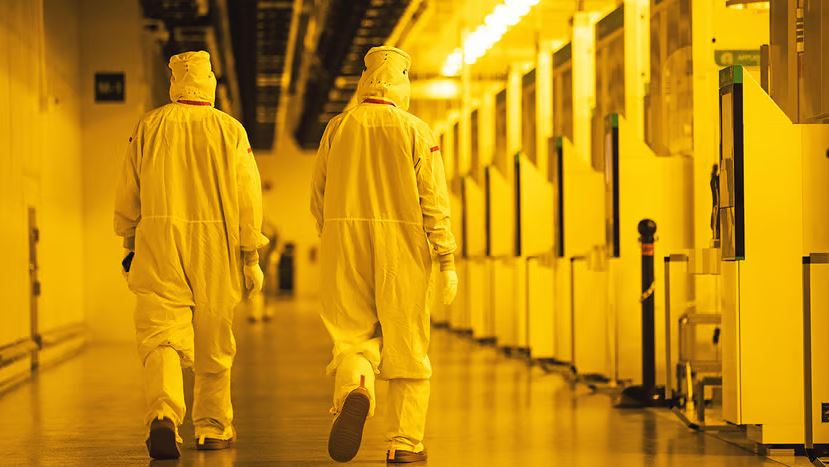
Semiconductor production serves as a crucial litmus test for America’s manufacturing resurgence. Over the past decades, the bulk of computer chip manufacturers moved away from the U.S. Despite maintaining top-notch semiconductor researchers and designers, the country lacks the workforce needed to transform silicon wafers into electronic circuits on a large scale. In an attempt to reverse this trend, the “Chips Act” passed last year will see the government allocate $50 billion over the next five years.
According to the Semiconductor Industry Association, a trade association, by 2030, the U.S. chip sector could face a shortage of around 67,000 technicians, computer scientists, and engineers, along with approximately 1.4 million such workers across the broader economy. In comparison, around 70,000 students complete engineering undergraduate degrees in the U.S. annually, underscoring the magnitude of the shortfall. This disparity could determine whether foundries operate at full capacity with manageable labor costs or face elevated expenses and reduced productivity.
A notable illustration of the issue is found in the ambitions surrounding the Taiwanese Semiconductor Manufacturing Company (tsmc) in Phoenix, Arizona. The company, the world’s largest chipmaker, intends to invest $40 billion in two factories. However, due to the shortage of skilled workers required for such a high-tech facility, the launch of tsmc’s first factory has been postponed from next year to 2025. To address this, tsmc plans to send technicians from Taiwan to train American staff.
Shari Liss from the Semi Foundation, a microelectronics lobbying group, expresses concern about the potential lack of a skilled workforce. Many share her apprehension, which has spurred the need for a coordinated effort. The Brookings Institution called for a surge of actions on national, state, and local levels to address workforce needs in the chip sector.
One pressing gap lies in the construction industry. Around 100,000 builders may be required for the initial phase of semiconductor fabrication plant investments. The government is making subsidies contingent on companies outlining plans to recruit and train construction workers. The Commerce Department aims to foster collaboration among companies to build a construction workforce, ensuring that trained workers can contribute to multiple fabrication plants.
The scarcity of workers also extends to technicians needed to operate the fabrication plants. Historically, these workers required two years of training, but shortened courses are being explored. For instance, Maricopa Corporate College in Arizona and Portland Community College in Oregon offer quick-start programs that promise to produce technicians within ten days. While such programs are attractive, the challenge remains to provide candidates with the necessary skills to operate expensive machinery.
Ultimately, the goal is to generate interest in careers in semiconductors. Companies are targeting individuals who may believe they lack the skills required for such jobs. Some colleges are even offering one-year programs to prepare students for the industry.
Despite these efforts, the U.S. is limiting access to a significant source of talent—immigrants who constitute around 40% of skilled workers in the semiconductor sector. Strict visa caps could exacerbate workforce shortages.
The push to revitalize manufacturing carries both promise and risk. Universities are adjusting their programs to align with industry needs, but the gamble to bring back manufacturing to America’s past industrial glory is enormous. It hinges on overcoming workforce shortages and positioning the U.S. as a manufacturing powerhouse once again.
Join Our WhatsApp Channel
DEAR READER,
Good journalism costs a lot of money. Yet only good journalism can ensure the possibility of a good society, an accountable democracy, and a transparent government. For continued free access to the best investigative journalism in the country, we ask you to consider making modest support to this noble endeavor. By contributing to The Trumpet News, you are helping to sustain journalism of relevance and ensuring it remains free and available to all. Your donation is voluntary — please decide how much and how often you want to give.
For offline donations, email donations@thetrumpetngr.com or call +2347026891070:
You May Also Like This...