Are you accessing this website using an Android phone?
If yes, the stress is over, just click the below button to download and install our Android app and we will hence bring the news to your doorstep.

Nigeria’s ruling All Progressives Congress (APC) is brushing aside rising tensions in Oyo State, insisting there is no crisis—only the usual political jostling that comes with power, ambition, and the looming battle for 2027.
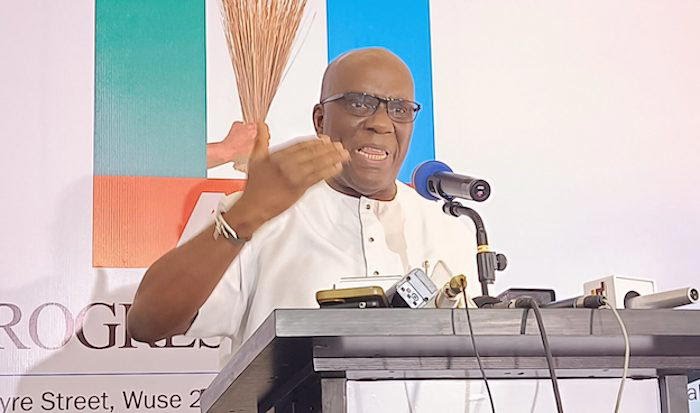
Speaking with a tone of calm defiance, the party’s National Publicity Secretary, Felix Morka, dismissed concerns that the situation in Oyo reflects any deep fracture within the APC. According to him, what some have labeled a crisis is nothing more than “normal banter” among party faithful positioning themselves for future contests.
Behind that reassurance, however, lies a familiar pre-election pattern: a crowded field of aspirants, rising tensions, and the high stakes of internal party selection. Morka argued that such disagreements are inevitable in a party as large and dominant as the APC, describing them as the natural consequence of many contenders squeezing through what he called a “narrow process of selection.”
The controversy has also drawn attention to internal financial dealings, particularly claims surrounding a reported ₦5.1 million payment by an aspirant. Morka was quick to clarify that the party does not “collect” money arbitrarily, stressing that all payments are voluntary and guided by clearly published rules. He added that aggrieved members are free to seek redress, including possible refunds, reinforcing the party’s attempt to project transparency and order.
Yet, even as APC leaders wave off concerns, the bigger political picture tells a more complex story. Across Nigeria, the party is simultaneously projecting unity and strength while facing increasing scrutiny from opposition voices. The African Democratic Congress (ADC), for instance, has accused the APC of being internally unsettled despite its dominance, claiming the ruling party is “still panicking” ahead of the 2027 general elections.
That tension between confidence and concern is playing out nationwide. On one hand, the APC has been consolidating power, holding congresses across all six geopolitical zones and rallying support behind President Bola Tinubu as a consensus figure for 2027. On the other, murmurs of discontent—like those in Oyo—continue to surface, hinting at underlying rivalries that could shape the party’s future.
For now, Morka insists Nigerians should look beyond the noise. He points to the party’s upcoming national convention as a defining moment, one that will showcase unity, reinforce structures, and signal the APC’s direction as it marches toward another high-stakes electoral cycle.
But in Nigeria’s ever-shifting political arena, what is dismissed today as “nothing to worry about” often becomes tomorrow’s defining battle line. As ambitions rise and alliances shift, the real test for the APC may not be whether disagreements exist—but whether it can contain them before they erupt into something far more consequential.
Join Our WhatsApp Channel
DEAR READER,
Good journalism costs a lot of money. Yet only good journalism can ensure the possibility of a good society, an accountable democracy, and a transparent government. For continued free access to the best investigative journalism in the country, we ask you to consider making modest support to this noble endeavor. By contributing to The Trumpet News, you are helping to sustain journalism of relevance and ensuring it remains free and available to all. Your donation is voluntary — please decide how much and how often you want to give.
For offline donations, email donations@thetrumpetngr.com or call +2347026891070:
You May Also Like This...