Are you accessing this website using an Android phone?
If yes, the stress is over, just click the below button to download and install our Android app and we will hence bring the news to your doorstep.

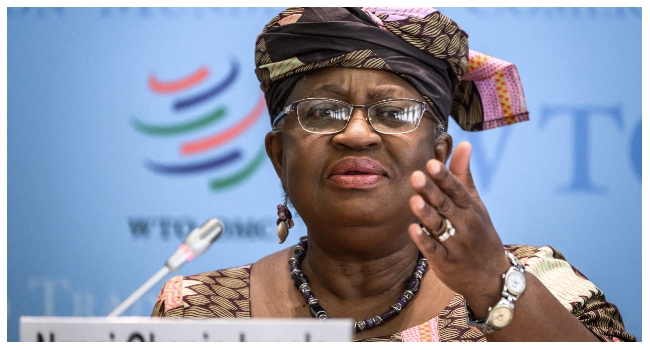
The world’s trade chiefs gathered under a darkening sky, not of weather—but of war. As the World Trade Organization (WTO) weighs the future of global commerce, a deepening Middle East conflict is threatening to rip apart the fragile threads holding the global economy together.
At the heart of the crisis is a brutal geopolitical reality: যুদ্ধ and trade do not coexist peacefully. The escalating conflict involving Iran and its ripple effects across the Gulf have sent shockwaves through energy markets, shipping lanes, and supply chains—placing the WTO in an increasingly uncomfortable spotlight as it struggles to remain relevant in a rapidly fragmenting world order.
Behind closed doors, officials are confronting a sobering truth—global trade, once the engine of prosperity, is losing momentum. After a stronger-than-expected rebound in 2025, growth is now projected to slow sharply in 2026, with the WTO warning that expansion could drop to around 1.9%, and even lower if the war intensifies. The culprit? Surging energy prices, disrupted logistics, and rising geopolitical tensions that are choking the arteries of international commerce.
The Strait of Hormuz—through which roughly one-fifth of the world’s oil flows—has become a dangerous bottleneck. Tanker traffic has been disrupted, insurance costs have surged, and energy prices have skyrocketed, triggering inflation fears across continents. This is no ordinary disruption; analysts are calling it the most severe global supply shock since the oil crises of the 1970s, with consequences that could echo for years.
The fallout is already visible. Oil prices have surged past critical thresholds, stock markets are wobbling, and nations heavily dependent on imported energy—especially across Asia and parts of Europe—are feeling the squeeze. Fertilizer exports and food supply chains are also under threat, raising alarms about a potential global food crisis as production costs soar and supply routes falter.
Yet, even as the crisis deepens, the WTO faces another battle—its own survival. Once the backbone of a rules-based global trading system, the organization is increasingly sidelined as major powers bypass its frameworks in favor of unilateral actions and protectionist policies. Calls for urgent reform are growing louder, with leaders warning that the institution must adapt or risk irrelevance in a world driven more by power politics than cooperation.
The irony is stark: just as the world needs coordination the most, divisions are widening. The United States and European Union are pushing for structural reforms, while developing nations insist on preserving fairness in agricultural trade and market access. The result is a tense standoff—one that mirrors the broader fractures shaping global geopolitics.
Even the engines of future growth are not immune. The WTO has cautioned that persistently high energy costs could derail the booming artificial intelligence sector, which has been a major driver of global investment in recent years. What was once seen as a buffer against economic slowdown may now become another casualty of war-driven inflation.
In this unfolding drama, the stakes could not be higher. Trade is no longer just about goods and services—it is about stability, food security, and the balance of global power. As ministers deliberate and diplomats negotiate, the question lingers: can the WTO reinvent itself in time to save a system that is increasingly under siege?
For now, the answer remains uncertain. But one thing is clear—the future of global trade is being written not in conference rooms, but on the frontlines of conflict.
Join Our WhatsApp Channel
DEAR READER,
Good journalism costs a lot of money. Yet only good journalism can ensure the possibility of a good society, an accountable democracy, and a transparent government. For continued free access to the best investigative journalism in the country, we ask you to consider making modest support to this noble endeavor. By contributing to The Trumpet News, you are helping to sustain journalism of relevance and ensuring it remains free and available to all. Your donation is voluntary — please decide how much and how often you want to give.
For offline donations, email donations@thetrumpetngr.com or call +2347026891070:
You May Also Like This...